The founder of the wine import company La Buena Vida
has arguably done more than anyone else to promote high-quality Spanish
wines and raise awareness of them in Belgium. Trained as a lawyer, Wim
Vanleuven (born in 1970) grew up in the Kempen region of Antwerp, in the
Flemish part of the country. His father kept a modest cellar, stocked
mainly with Bordeaux and Burgundy wines —“the most daring thing at the
time was a wine from the Rhône or Languedoc”— and Wim would often
accompany him to tastings.
Thanks to an Erasmus scholarship in
Barcelona, he met a number of producers whose wines would go on to
redefine the Spanish wine scene. In 2003, he strengthened his ties with
Spain by marrying María Jané of the Jané Ventura winery in Penedès. Today, he and his business partner Johan Sterckx
—voted best sommelier in Belgium in 1997— manage a portfolio of 85
producers. Notably, their selection is not dominated by classic wineries
and renowned regions such as Rioja or Ribera del Duero.
Vanleuven sends three weekly emails to his clients, explaining
various aspects of Spanish wine. More recently, he has started sharing
these insights on Instagram through short videos (in Flemish). He is
also restoring a traditional farmhouse in El Pla de Manlleu, one
of the most elevated areas in Penedès, in the province of Tarragona,
with the aim of turning it into a meeting place for small, local
producers.
In this interview, he explains how he built a successful
business from scratch by representing many of the producers who
transformed Spain’s image abroad. He also shares his views on the
country’s wine evolution and offers an optimistic outlook on the
challenges ahead.
How did your journey with Spanish wine begin?
It
was really a series of coincidences. While studying for my Erasmus in
Barcelona, I started dating a girl from Rioja who was studying
management. I travelled with her to the region, where her father took me
to visit several wineries. To stay on good terms, I’d say that I liked
the wines, even though I didn't, really. I was used to drinking French
wines, perhaps not the best, but certainly of a higher quality than what
was available in Spain at the time. Most bottled wines came from Rioja;
Ribera del Duero was just taking off; and Penedès was very commercial.
There was not much choice.
While today almost all wines are
technically sound, in the 1970s Spain prioritised volume over quality.
In contrast, the Italians chose to increase prices. Now, some classic
Rioja producers are employing the same strategy, having notably improved
their quality. Viña Ardanza's price hike is a perfect example.
It seems risky to start a wine business by turning your back on Rioja
Yes,
but at that time I heard about what was going on in Priorat. It really
piqued my interest, so I visited the area. I was only 22, and not
everyone made time for me, but Carles Pastrana of Clos de l'Obac
certainly did. When I finished my final year of law school, I decided to
start importing Spanish wines. I set up
La Buena Vida on 31 August 1994. By September, I had secured a job at
the Cuatrecasas law firm in Barcelona, and my Rioja girlfriend and I
moved into a flat in the Paralelo district.
For
a short while, I had a Rioja made by Miguel Ángel de Gregorio called
Herencia Lasanta, but you could say I really started with Clos de l'Obac
[Priorat] and Albet i Noya [Penedès]. Josep Maria and Toni had been
working organically since the 1970s and by that time had already
launched their Collection range. Next came Barbara Forés [Terra Alta]
and Avgvstvs [Penedès], and the portfolio kept growing until it included
24 wineries, although sales were modest.
Wine cases were stacked
up at my parents' house, somewhere between my bedroom and the garage.
Initially, it was easy enough to sell to family and friends, but
eventually things became more complicated. I decided to return to
Belgium, where I could earn more money as a lawyer while continuing to
develop the business. I’d meet sommeliers to taste wines after their
shift ended. I no longer had a girlfriend, so I had more time on my
hands. At such a young age, you don't mind working all hours.
Was it difficult to introduce Spanish wines to the Belgian market, and to gain access to good restaurants?
In
1994, nobody expected to pay more than 1,000 Belgian francs (about €25
today) for a Spanish wine. I was incredibly naïve. I didn't know the
market, but that's often how things work out, albeit with a lot of hard
work behind the scenes. My strategy was to approach the best sommeliers
and catch their interest by telling them that I had new and interesting
wines. That's how I met my business partner, Johan Sterckx. When he
joined the business in 1997, many doors opened for us.
That said,
Belgium has no shortage of wine importers. Anyone who takes a wine
course is tempted to import a pallet of wine. Most of them focus on
price, but I have never believed in supermarket-style strategies. I look
for the best producers in each area, regardless of price. Sommeliers
are drawn to top wines, and that is what I, perhaps naively and
enthusiastically, offered them. I believe that kind of early ingenuity
is crucial for any entrepreneur.
From your perspective, what have been the main changes in Spanish wine since then?
A
pivotal moment for me came in 2004 with the creation of our second
company, La Buena Tierra, together with my wife María. She was looking
for a professional role in Belgium, and the philosophy was the same as
with wine: to source the best Spanish produce from each region. At the
time, Ferran Adrià and the Roca family were already internationally
acclaimed and we decided to import some of the things that they were
doing: the texturas in the case of El Bulli and the Roca brother's roner
for low-temperature cooking. Thanks to the success of molecular
cuisine, for the first time in 15 years, chefs began to take us
seriously and to see beyond “those nice little Spanish wines.” Adrià and
the Rocas changed the narrative. From then on, it became much easier
to introduce Spanish wines in Belgium.
How has the positioning
of Spanish wine changed over the years? Is there a significant
difference in quality between supermarket wines and premium ranges?
In
my opinion, it is important that good Spanish wines are sold in
supermarkets. If a consumer buys a good bottle, chances are they will
buy it again. This was much more problematic in the past. Technically
speaking, the last 15 years have seen a giant leap forward.
Over
the past decade, the culture of wine has developed significantly in
Spain. A producer may have all the necessary equipment, but without
knowing what makes a wine truly good, they won’t succeed. The younger
generation is much more knowledgeable than their predecessors. Rioja,
for example, remained unchanged for almost 15 years. Nothing happened.
However, the past few years have been terrific, providing us with some
much-needed oxygen during the pandemic. Our turnover dropped by 80% due
to restaurant closures, but then all these exciting new wines emerged.
And we expanded our portfolio with around 20 new wineries.
How does the Belgian wine market differ from neighbouring countries? Is Belgium a trendsetter in any way?
Wine
collecting is becoming increasingly popular here. With the Bordeaux
crisis and the rising prices in Burgundy, people who used to focus on these regions are now turning their attention to Spanish wine.
Collectors
are also taking notice of Atlantic wines from Spain. Specifically, I am
referring to the Canary Islands and Galicia. Spain is still most
commonly associated with Tempranillo, a sweet, low-acidity grape that
tends to please most palates. However, wine enthusiasts who lean towards
fresher styles are now seeking out this Atlantic identity.
Mencía
is a tricky grape variety —it has low acidity and can overripen easily.
However, we are fortunate to work with the two leading producers from
the outset: Descendientes de J. Palacios and Raúl Pérez. We also work
with Pérez's family winery, Castro Ventosa, currently managed by Raúl's
nephew, César Márquez. I’ve recently opened bottles of Valtuille from
2001, 2003 and 2004, all still in perfect condition. The same goes for
the first wines made by Ricardo Pérez Palacios 25 years ago.
Which producers or regions do you think best represent the cultural changes taking place in Spain?
Personally,
I’ve found Envínate the most exciting in recent years, particularly
their wines from Galicia and Tenerife. They are quite alternative, but
there’s still something classical about them, and their wine culture is
extensive compared to other producers. They are a good example of what
can be achieved. From a commercial point of view, their wines are
fantastic —some may seem unusual, but they are easy to sell and are not
expensive considering their quality. Envínate epitomises this new
generation perfectly.
As for wine regions, I tend to gravitate
towards Atlantic and volcanic wines because my taste has evolved over
the past 20 years. That said, I still enjoy a 25-year-old Rioja such as
Roda I. It depends on the occasion — I'm very eclectic! Only 20% of the
wines in my cellar are Spanish. You could say I’m my colleagues’ best
customer — I just wish the reverse were true! While they mainly buy Vega
Sicilia and Pingus, I probably own Belgium's largest collection of
Barolos.
How can this be reversed?
I think that Spain is
the country with the largest potential and diversity. And wine culture,
which is the key to unlocking this potential, is growing. Spain is in
an extraordinary position, and this is only the beginning. I used to
think our turnover would top out at €8m, but considering how things are
evolving, I now believe we can reach €20m. The market is getting bigger
and bigger for us.
Big names like Pingus and Vega Sicilia
continue to sell well — Belgium is Vega Sicilia's fourth-largest
importer worldwide. What we lack are brands. The Italians and the French
are way ahead of us in this respect, but we will catch up eventually.
It is refreshing to hear such optimism in the current context of uncertainty
Commercial
affairs are becoming increasingly complicated and the hospitality
industry is performing poorly. However, Spain is the EU country in the
best financial position. Additionally, wine collectors have suffered
substantial losses on the stock market as a result of Trump's policies.
Many businesses are going to close because, no matter how passionate
their owners are, they lack commercial viability. We are constantly
seeking brand turnover and steady sales over time. The downside now is
that Spanish wine prices are catching up with those of other countries.
In the past, all the good wines were relatively cheap.
Do you think the new classifications and zonings help to sell premium wines, or do they confuse consumers?
It
will take many more years than expected for the classifications to gain
traction. The average distributor prefers to follow market trends. We
are committed to branding because people want reassurance and reliable
products.
The way things are explained to customers is key. As
ambassadors for Spanish producers in Belgium, our mission is to sell
more wine. Alongside Rioja and Bierzo, we want to see wines from all the
villages in Priorat and the premier crus on wine lists, as well as a
San Vicente wine from José Gil or the Paso Las Mañas single-vineyard
wine from Artuke. This will take years, but it is the future.
This
also requires more visits and samples. Only by opening bottles will
people begin to understand the differences between villages. While
identifying plots and villages is great fun for wine aficionados, for us
it means more work and investment.
How is Spain doing on wine lists compared to Europe's leading producers?
It
depends on the restaurant and the sommeliers, but generally speaking,
we're doing well. For over 15 years, virtually all the Spanish wines in
Belgian restaurants were ours, but the selection is much more diverse
now. This means that other importers are bringing in good producers, and
collectively, we can increase the presence of Spanish wines.
Some
young sommeliers are now reluctant to list Bordeaux wines.
Nevertheless, the best-selling Spanish wines are still powerful reds,
particularly Tempranillos from Ribera del Duero. There is a discrepancy
between what’s trendy and what actually sells.
Have Belgian
consumers changed their preferences when it comes to Spanish wine? Are
they showing any interest in emerging wine regions?
Things are
changing, but we are still at the beginning of the journey. A sommelier
who does not know his job well thinks that Spain is all about power, sun
and concentration, and is unaware that we have been offering elegant,
fresh and characterful wines for years.
Our best-selling wine
right now is Joan d'Anguera's Les Maiols from Montsant. This light red,
almost like a rosé, embodies the new Mediterranean style. It is inspired
by Château Rayas and based on the idea that the future lies in the
past.
Is the search for freshness carried too far nowadays?
It's
a common mistake among many young people that if you harvest very
early in the Mediterranean, you’ll get a fresh wine, but it will taste
green. I don't care about the alcohol content; the important thing is
that the wine tastes fresh. Some of the new generations of whites are
unripe, and that is a mistake. Fully ripe grapes can yield fresh, bright
wines, which is what the Anguera brothers advocate: wines that you can
easily drink a whole bottle of. Compared to the concentration of the
past, they now have lower yields and produce far fewer bottles.
How has La Buena Vida's portfolio evolved? Which regions or styles interest you most today?
Due
to my marriage and my beginnings in Barcelona, we have a strong focus
on Catalan wines. It may sound odd, but Tempranillo has never really
been my thing. I have always been attracted to Galicia and Catalonia
because of their diversity. However, we also work with producers from
Ribera and Rioja. I have always been reluctant to work with classic
wineries, but I have recently developed a real fondness for La Rioja
Alta, so never say never.
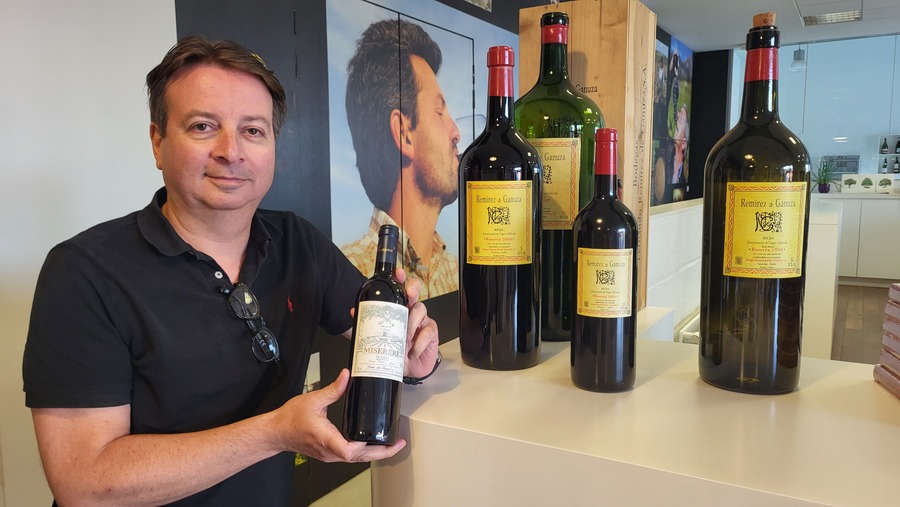
In Rioja, we have worked with Roda since
their first vintage, and later with Remírez de Ganuza —both were major
trailblazers in their time. Abel Mendoza has always been my favourite
producer due to his size, but I also learnt a great deal from Agustín
Santolaya and Fernando Remírez de Ganuza. About 10 years ago, we
introduced Macán and Artuke, and more recently José Gil —since his
second vintage. I really like what he is doing. We are also working well
with Alegre & Valgañón.
Has the break-up of DO Cava had an impact in a country that drinks so much sparkling wine?
The
Spanish sparkling wine market in Belgium is dead. Most of what we get
here is cheap cava. When I first started out in the trade, a €10 cava
was considered cheap; nowadays, that’s seen as expensive. Furthermore,
taxes have increased so we cannot compete with the Netherlands, where
duties have been reduced. Our average bottle price this year is €40.
Customers prefer champagne because it carries more prestige. I find this
terribly frustrating, but that's the way things are.
What are the most important challenges for Spanish wine in the current tough international scenario?
Produce
less. Produce better. Many winemakers, including promising newcomers,
are going to be forced out of business. It's a shame that their naivety
is not always on the right track. You can only afford to be naive if you
also travel and work a lot.
Would you venture any predictions for the future?
I
think there are going to be more and more white wines. Everyone in
Rioja and Ribera is obsessed with whites now. There will also be more
wines that reflect their terroir. Producing Atlantic-style wines in a
Mediterranean or continental region is no longer an option. Balance and
respect for the terroir are absolutely crucial.