We are the exclusive importer in Belgium of all the wine estates featured on this website.

Happy Wine Bottle icon - La Buena Vida Help me choose
Save the date for our Exclusive VIP-Tasting – only top wines on the tasting tables! Sunday 29 and Monday 30 November.
READ MORE

Tenerife

Johan Sterckx - 5 July 2026
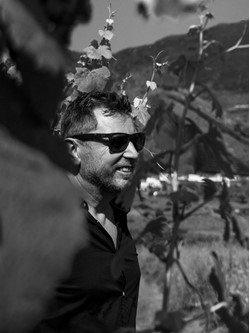


On this island, the word complexity takes on a completely different, even more complex meaning. If you see what I mean.

The island and its volcanic origins
Seven million years ago, the island consisted of three separate parts created by volcanic eruptions. These form the beak, tail and belly of the duck. The soils in these three regions contain the oldest lava formations. Later eruptions created younger lava and basalt terroirs, shaping Tenerife as we know it today. Mount Teide is the central, still active crater. The most recent eruption on the island took place in 1908. Lava flows shaped the island and created its valleys, ridges and lagoons.

Garachico
Garachico was the most important of the three ports in the north. It was mainly used for exporting wine, particularly Malvasía wines made from grapes grown on lower-lying land.

Garachico looks very different today from how it did 300 years ago, when a volcanic eruption buried a large part of the port beneath the lava. This created the Garachico we see today, with many historic reminders of its former fortifications, promenade, lava pools now used as outdoor swimming pools, merchant houses and more.

Cultural and historical influences
Over the centuries, the island absorbed many cultural influences brought by travellers from around the world. It was also repeatedly attacked by other nations trying to take control of it. After several attempts, an agreement was reached with the English under which they would cease their repeated attacks on the island.

This had a major impact on exports. Until then, the English had handled a large share of Canary wine exports and had helped build their reputation, just as they did with wines from Jerez. They subsequently turned their attention to Port and Madeira, where their influence left a lasting mark.

Agriculture and economic change
Historically, Tenerife was a highly productive wine island, but the sector has undergone major upheaval. Banana plantations replaced vineyards along the coastline because bananas had become a more important and profitable export product. Hotels were also built along the northern coasts because they generated more income than labour-intensive viticulture.

Avocado production is now growing rapidly as well, but it is also contributing to water shortages in agriculture. Water is expensive and must be used with great care in both agriculture and viticulture.

Training systems and viticulture
Viticultural practices vary depending on where you are in the north of the island. The trenzado system was introduced by the Portuguese, while pergolas came from the Italians.

Trenzado is especially common in the Valle de Orotava. The shoots are trained towards either the south or the north, depending on air circulation within the vineyard. A trenzado can reach a length of up to 20 metres. The shoots are tied together to control the vine’s vigour.

Small pergolas are also used. In the south, they provide shade for the grape bunches. In the north, they improve air circulation and help prevent fungal diseases.

The south of the island
The south of the island has a very different soil composition. Winds from the Sahara, 400 kilometres away, carry sand that forms a top layer in Abona and Güímar. This area is also home to Vilaflor, the highest wine village, and to Europe’s highest vineyards.

Taganana
Taganana in the north is characterised by basalt and red basalt, steep slopes and vines that are trained and supported by stakes. After the harvest, the stakes are removed so the vines can lie on the ground.

This type of vineyard is extremely labour-intensive. Local people assist the winegrowers with the vineyard work to prevent these high-quality vineyards from disappearing. The plots are very difficult to reach and have gradients of 45% or more.

Valle de Orotava
Valle de Orotava is a broad valley formed by a melting layer of ice. It is slightly warmer and is divided into several subregions, including Palo Blanco. Within Palo Blanco lies Las Molinas, which is considered the grand cru terroir for Listán Blanco.

Ycoden-Daute-Isora
Ycoden-Daute-Isora takes its name from three subregions that were each once controlled by influential families. Each subregion was named after the family that owned it.

There are more pergola-trained vines here, as well as steep vineyards close to the sea and strongly influenced by it. The southernmost part is the warmest and includes the impressive El Palmar valley and Laderas del Teno. A little farther on lies the valley formed at the foot of the Benje crater, with Mount Teide in the background.

Benje is the warmest subregion, but vineyards are planted at altitudes of up to 1,000 metres, and that makes all the difference. This is why another training system is used here: bush vines, which protect the grapes from sunburn.

Clouds, wind and altitude

Then there is the influence of the clouds and the way they interact with nature.

The clouds appear where the island turns green. Nowhere is the contrast more striking than on top of the mountain ridges. Cloud formations spill just over the ridges, creating spectacular views of this natural phenomenon. The clouds reduce sunlight and increase humidity. They also help determine which grape variety is planted at which altitude.

This phenomenon is typical of Tenerife because its high mountains hold back the clouds and wind. Islands such as Lanzarote do not experience this, apart from one area in the north. The wind moves freely there, resulting in less vegetation and a drier terroir.

Grape varieties and fragmented ownership
The location of each grape variety has also been shaped by history, the different nationalities that passed through the island and their cultural influences. A large proportion of the vineyards are well over 100 years old.

Vineyard ownership is highly fragmented. There are almost as many grape growers as there are planted hectares. This makes purchasing a vineyard a huge undertaking. The land is often divided among members of a single family, requiring separate negotiations that can last for decades.

Viñátigo recently planted 0.2 hectares of pergola-trained vines next to the winery. This plot was owned by 11 different people, and acquiring it took just over 10 years. The same applies to a terrace a few metres away, which belonged to 7 different people. Just to show how complex everything is…

Recovering old vineyards rather than planting new ones
When you ask a winegrower whether they are planting many new vineyards, the answer is very different from what you might expect. There is no real need for new plantings. So many old vineyards have been neglected over recent decades that it makes more sense to recover them. These vineyards have enormous quality potential.

Young vineyards are often plots where the vines are being converted to a different training system.

Many small projects are currently emerging, but they are often abandoned quite quickly once their owners are confronted with the workload compared with the final result.

The wines undergo a short maceration of 7 to 9 days. Pump-overs are limited and gentle, with the sole aim of keeping the cap moist. The focus is not on extraction, but rather on infusion and preserving the fruit.

In general, the wines are less ripe than they used to be, with more immediate appeal, greater subtlety and more elegance.

There is a strong focus on vineyard work and on collecting data from every individual plot.
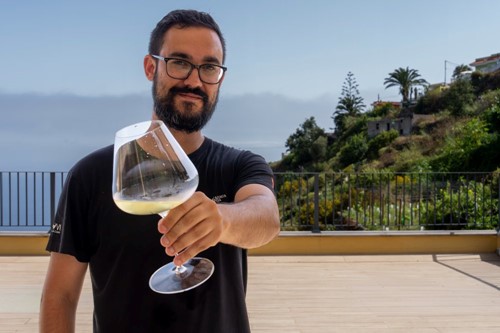
Viñátigo

75 cl.
92+ R. Parker
New
Biological
Camino de la Peña

Camino de la Peña 2023

Canarias
Viñátigo
D.O.P. Islas Canarias - Tenerife
75 cl.
white
37,68 € /pc
31,14 € excl. VAT
Assembly

Listán blanco

Content

75 cl.

Year

2023

Description

Camino de la Peña 2023 is a single-vineyard white wine from Viñátigo, from Altos de Icod in northern Tenerife. It is made from Listán Blanco grown in an old vineyard at around 450 metres above sea level. The vines are traditionally trained in parral, a type of pergola, on terraces with young volcanic basalt soils. Direct exposure to the trade winds brings freshness to the vineyard.

75 cl.
93 R. Parker
New
Biological
Laderas de Teno

Laderas de Teno 2022

Canarias
Viñátigo
D.O.P. Islas Canarias - Tenerife
75 cl.
red
54,56 € /pc
45,09 € excl. VAT
Assembly

Baboso tinto, Bastardo (Merenzao), Tintilla, Vijariego Tinto

Content

75 cl.

Year

2022

Description

This is a new wine for the estate, with 2017 being its first vintage. The Laderas de Teno plot is located in the El Palmar valley, in north-western Tenerife. Located at 700 m, with direct exposure to the very cool winds coming from the North Atlantic. The Teno massif is one of the first geological formations from which the island of Tenerife later emerged. The soil of this part of the island has a perfect combination of clay with volcanic rocks that allow perfect drainage. The history of the island along with the most beautiful varieties found here!

75 cl.
Listán Blanco de Canarias

Listán Blanco de Canarias 2025

Canarias
Viñátigo
D.O.P. Islas Canarias - Tenerife
75 cl.
white
21,56 € /pc
17,82 € excl. VAT
Assembly

Listán blanco (100%)

Content

75 cl.

Year

2025

Description

With his Viñátigo project, Jesús Méndez wants to revive the old ungrafted and disappearing grapes of the Canary islands. All cuvées are produced in very small quantities, and not every year, as the choice of varietal may change with the vintage. This Listan Blanco comes from 100+ year-old vines planted on young volcanic, well-drained soils, rich in minerals, in the North-Western part of Tenerife.

75 cl.
Listán Blanco de Canarias

Listán Blanco de Canarias 2024

Canarias
Viñátigo
D.O.P. Islas Canarias - Tenerife
75 cl.
white
20,38 € /pc
16,84 € excl. VAT
Assembly

Listán blanco (100%)

Content

75 cl.

Year

2024

Description

With his Viñátigo project, Jesús Méndez wants to revive the old ungrafted and disappearing grapes of the Canary islands. All cuvées are produced in very small quantities, and not every year, as the choice of varietal may change with the vintage. This Listan Blanco comes from 100+ year-old vines planted on young volcanic, well-drained soils, rich in minerals, in the North-Western part of Tenerife.

75 cl.
Listán Negro

Listán Negro 2023

Canarias
Viñátigo
D.O.P. Islas Canarias - Tenerife
75 cl.
red
21,36 € /pc
17,65 € excl. VAT
Assembly

Listán Negro (100%)

Content

75 cl.

Year

2023

Description

Jesús Méndez wants to give autochthonous Canarian cépages that are almost extinct a face back with his Viñátigo project. All his wines are vinified in very limited volumes. 'Pie franco' on volcanic substrates. Blend of ungrafted native white varieties from the Canary Islands. The selected varieties and proportions vary from year to year depending on the harvest. The Listan Negro grapes come from ungrafted vines more than 100 years old. Grown between 500 and 900 metres above sea level, in north-western Tenerife. Young volcanic soils, with good drainage and very rich in minerals.

75 cl.
94 R. Parker
New
Biological
Lomo de la Era Blanco

Lomo de la Era Blanco 2024

Canarias
Viñátigo
D.O.P. Islas Canarias - Tenerife
75 cl.
white
37,68 € /pc
31,14 € excl. VAT
Assembly

Listán blanco

Content

75 cl.

Year

2024

Description

Lomo de la Era 2024 is a single-vineyard white wine from Viñátigo, from Cruz Santa on the western side of the La Orotava Valley. It is made from Listán Blanco grown on old vines trained in the traditional Cordón Trenzado system. At 500 metres above sea level and under the influence of the Atlantic trade winds, the vineyard produces a fresh white wine with a distinct volcanic character.

75 cl.
New
Biological
Maipé de Taganana

Maipé de Taganana 2025

Canarias
Viñátigo
D.O.P. Islas Canarias - Tenerife
75 cl.
white
37,68 € /pc
31,14 € excl. VAT
Assembly

Listán blanco

Content

75 cl.

Year

2025

Description

Maipé de Taganana is a single-vineyard white wine from Viñátigo, from Taganana in the Anaga mountains in the northeast of Tenerife. The wine comes from one old vineyard planted mainly with Listán Blanco on volcanic soils. The name maipé is a local corruption of malpaís, literally meaning infertile land. The vineyard lies among volcanic rocks and was partly buried under stones after a rockfall in the early 20th century. Production is limited to just 1,300 bottles.

75 cl.
Biological
Viñátigo Ancestrales blanco

Viñátigo Ancestrales blanco 2023

Canarias
Viñátigo
D.O.P. Islas Canarias - Tenerife
75 cl.
white
39,42 € /pc
32,58 € excl. VAT
Assembly

Gual (100%)

Content

75 cl.

Year

2023

Description

Viñátigo produces single-varietal wines from indigenous grape varieties that had largely disappeared from the scene. Ungrafted vines on volcanic soils. This Ancestral is made in an old-fashioned way and is definitely a wine for true wine geeks… The Gual comes from Finca San Juan Degollado and Finca Mazapé. The vines are ungrafted. Gual was the first of the nearly extinct indigenous grape varieties of the Canary Islands that Juan Jesús set out to recover. Finca San Juan Degollado is located near Garachico, at 160 metres above sea level. Finca Mazapé lies in San Juan de la Rambla, on a cliff overlooking the sea, at 150 metres above sea level. Both plots are situated in the north-west of Tenerife. The young volcanic soils are well drained and very rich in minerals. The soil at San Juan Degollado originates from the erosion of the coastal cliffs of La Culata, which border the plot. Because of the mountainous terrain, the vineyard is divided into centuries-old terraces. These terraces also help prevent the fertile soils from sliding away.

75 cl.
Biological
Viñátigo Ancestrales Tinto

Viñátigo Ancestrales Tinto 2020

Canarias
Viñátigo
D.O.P. Islas Canarias - Tenerife
75 cl.
white
44,95 € /pc
37,15 € excl. VAT
Assembly

Baboso tinto (50%), Tintilla (50%)

Content

75 cl.

Year

2020

Description

Viñátigo makes mono-varietal wines with local grapes that are almost extinct. This Ancestral Tinto is made with the grapes of un-grafted vines and vivified "the good old way". For the real wine fans.

75 cl.
Biological
Viñátigo Ensamblaje Blanco

Viñátigo Ensamblaje Blanco 2025

Canarias
Viñátigo
D.O.P. Islas Canarias - Tenerife
75 cl.
white
35,61 € /pc
29,43 € excl. VAT
Assembly

Gual, Malvasia, Marmajuelo, Verdello, Vijariego blanco

Content

75 cl.

Year

2025

Description

Jesús Méndez revives the old ungrafted vines of the volcanic terroirs of the Canary islands, often long forgotten. This cuvée blends 4 white varietals and its production is only 800 bottles.

75 cl.
Biological
Viñátigo Ensamblaje Tinto

Viñátigo Ensamblaje Tinto 2022

Canarias
Viñátigo
D.O.P. Islas Canarias - Tenerife
75 cl.
red
39,35 € /pc
32,52 € excl. VAT
Assembly

Baboso tinto, Negramoll, Tintilla, Vijariego Tinto

Content

75 cl.

Year

2022

Description

Jesús Méndez wants to give autochthonous Canarian cépages that are almost extinct a face back with his Viñátigo project. All his wines are vinified in very limited volumes. Assemblage of ungrafted red varieties native to the Canary Islands, the proportions of which vary each year depending on the growing cycle. The varieties used to make this blend are usually Negramoll, Tintilla, Vijariego Negro and Baboso Negro. Young and old volcanic soils, with good drainage and very rich in minerals. Some areas are the result of recent volcanic eruptions and are rather sandy. Other areas, like the plots in the El Palmar valley, are from the Teno massif, one of the oldest parts of the island and with more clay. Vines grow from sea level to 1,000 metres altitude. +-3500 bottles production.

75 cl.
Biological
Viñátigo Marmajuelo

Viñátigo Marmajuelo 2022

Canarias
Viñátigo
D.O.P. Islas Canarias - Tenerife
75 cl.
white
25,69 € /pc
21,23 € excl. VAT
Assembly

Marmajuelo (100%)

Content

75 cl.

Year

2022

Description

Marmajuelo is one of Tenerife's most unsung varietals. This cuvée - a 100% Marmajuelo- is one of the fruitiest wines of this island. The grapes come from Finca Los Parrales, in Garachico, at 160 m above sea-level, and Finca Mazapé, on a 160m-cliff overlooking the Ocean, in San Juan de la Rambla. These two parcels lay in the North-West of Tenerife, on young, mineral-rich volcanic soils with a good drainage.

75 cl.
Biological
Viñátigo Negramoll

Viñátigo Negramoll 2023

Canarias
Viñátigo
D.O.P. Islas Canarias - Tenerife
75 cl.
red
27,65 € /pc
22,85 € excl. VAT
Assembly

Negramoll (100%)

Content

75 cl.

Year

2023

Description

Negramoll is the main grape used in Tenerife to make everyday consumption wine. Yet, if one check its yield and pays attention to the winemaking, this varietal can produce vinous and very interesting wines. The production of this cuvée is only 4,500 bottles.

75 cl.
Viñátigo Tintilla

Viñátigo Tintilla 2023

Canarias
Viñátigo
D.O.P. Islas Canarias - Tenerife
75 cl.
red
29,38 € /pc
24,28 € excl. VAT
Assembly

Tintilla (100%)

Content

75 cl.

Year

2023

Description

100% Tintilla from Finca Laderas de Teno. Ungrafted vines. The Laderas de Teno plot is located in north-west Tenerife at 700 metres above sea level. Located in the El Palmar valley, in the Teno nature reserve. The vineyard consists of 33 terraces, starting at the foot of a volcano in the middle of the valley. Geologically, this is one of the oldest areas on the island, the result of the first volcanic eruptions. The clay soil is an evolution of the degradation and erosion of the Teno massif. Total production of only 7,000 bottles.

75 cl.
Viñátigo Vijariego Blanco

Viñátigo Vijariego Blanco 2024

Canarias
Viñátigo
D.O.P. Islas Canarias - Tenerife
75 cl.
white
28,30 € /pc
23,39 € excl. VAT
Assembly

Vijariego blanco (100%)

Content

75 cl.

Year

2024

Description

Viñátigo makes mono-cépage wines from indigenous grape varieties that have somewhat disappeared from the scene. 'Pie franco' planted on volcanic soils. Vijariego Blanco is the grape variety with the highest acidity in the Canary Islands. It also has very good adaptability in various environments. The plots are located in the villages of San Juan de la Rambla, La Guancha and Icod de los Vinos, in north-western Tenerife. Because of its good adaptability to different environments, plantings are between 200 and 1000m. Young volcanic soils, mainly sandy. Total production of only +- 3000 bottles.

75 cl.
Biological
Viñátigo Gual

Viñátigo Gual 2022

Canarias
Viñátigo
D.O.P. Islas Canarias - Tenerife
75 cl.
white
25,69 € /pc
21,23 € excl. VAT
Out of stock
Assembly

Gual (100%)

Content

75 cl.

Year

2022

Description

With this project, Jesús Méndez wants to revive the old disappearing Canarian grapes. All his wines are produced in very limited quantities.

Envínate

75 cl.
95 R. Parker
Biological
Benje Blanco

Benje Blanco 2024

Canarias
Envínate
D.O.P. Islas Canarias - Tenerife
75 cl.
white
24,14 € /pc
19,95 € excl. VAT
Product not available
Assembly

Listán blanco (100%)

Content

75 cl.

Year

2024

Description

Benje is the name of a nearby crater which the Listán Bianco comes from.

75 cl.
Biological
Benje Blanco

Benje Blanco 2025

Canarias
Envínate
D.O.P. Islas Canarias - Tenerife
75 cl.
white
24,14 € /pc
19,95 € excl. VAT
Assembly

Listán blanco (100%)

Content

75 cl.

Year

2025

Description

Benje is the name of a nearby crater which the Listán Bianco comes from.

150 cl. (Magnum)
Biological
Benje Blanco

Benje Blanco 2025

Canarias
Envínate
D.O.P. Islas Canarias - Tenerife
150 cl. (Magnum)
white
53,78 € /pc
44,45 € excl. VAT
Assembly

Listán blanco (100%)

Content

150 cl. (Magnum)

Year

2025

Description

Benje is the name of a nearby crater which the Listán Bianco comes from.

150 cl. (Magnum)
98 R. Parker
Biodynamic
Palo Blanco

Palo Blanco 2024

Canarias
Envínate
D.O.P. Islas Canarias - Tenerife
150 cl. (Magnum)
white
119,79 € /pc
99,00 € excl. VAT
Product not available
Assembly

Listán blanco (100%)

Content

150 cl. (Magnum)

Year

2024

Description

Behind the Envinate project, one of the most prominent of Spain's new generation, are Roberto Santana, Alfonso Torrente, Laura Ramos, and José Martínez. The four met in 2005 while studying oenology at the University of Alicante and formed a team.

75 cl.
96 R. Parker
Biological
Táganan Blanco

Táganan Blanco 2024

Canarias
Envínate
D.O.P. Islas Canarias - Tenerife
75 cl.
white
52,27 € /pc
43,20 € excl. VAT
Product not available
Assembly

Forastera blanca, Gual, Listán blanco, Marmajuelo, Vijariego blanco

Content

75 cl.

Year

2024

Description

Táganan is a village on the North-Western side of the Teide, on the island of Tenerife. The vines are quite close to the coast. This cuvée blends different terroirs from Taraconte.

75 cl.
Biological
Táganan Blanco

Táganan Blanco 2025

Canarias
Envínate
D.O.P. Islas Canarias - Tenerife
75 cl.
white
52,27 € /pc
43,20 € excl. VAT
Assembly

Forastera blanca, Gual, Listán blanco, Marmajuelo, Vijariego blanco

Content

75 cl.

Year

2025

Description

Táganan is a village on the North-Western side of the Teide, on the island of Tenerife. The vines are quite close to the coast. This cuvée blends different terroirs from Taraconte.

150 cl. (Magnum)
Biological
Táganan Blanco

Táganan Blanco 2025

Canarias
Envínate
D.O.P. Islas Canarias - Tenerife
150 cl. (Magnum)
white
104,54 € /pc
86,40 € excl. VAT
Product not available
Assembly

Forastera blanca, Gual, Listán blanco, Marmajuelo, Vijariego blanco

Content

150 cl. (Magnum)

Year

2025

Description

Táganan is a village on the North-Western side of the Teide, on the island of Tenerife. The vines are quite close to the coast. This cuvée blends different terroirs from Taraconte.

75 cl.
95 R. Parker
Biological
Benje Tinto

Benje Tinto 2024

Canarias
Envínate
D.O.P. Islas Canarias - Tenerife
75 cl.
red
24,14 € /pc
19,95 € excl. VAT
Out of stock
Assembly

Listán Prieto (90%), Listán blanco (9%), Tintilla (1%)

Content

75 cl.

Year

2024

Description

Benje is the name of a nearby crater which the Listan Prieto comes from, near Santiago del Teide (Tenerife). The vines are located some 1,000 metres above sea level.

75 cl.
96 R. Parker
Biodynamic
Migan Tinto

Migan Tinto 2024

Canarias
Envínate
D.O.P. Islas Canarias - Tenerife
75 cl.
red
39,08 € /pc
32,30 € excl. VAT
Assembly

Listán Negro (100%)

Content

75 cl.

Year

2024

Description

Migan is made from old vines in La Orotava, where the white Palo Blanco is also produced. Here too, we find the classic Cordón Trenzado, or braided vineyards—unique vineyards rich in history, always marked by their typical volcanic characteristics. The best red from this region!

150 cl. (Magnum)
96 R. Parker
Biodynamic
Migan Tinto

Migan Tinto 2024

Canarias
Envínate
D.O.P. Islas Canarias - Tenerife
150 cl. (Magnum)
red
90,75 € /pc
75,00 € excl. VAT
Product not available
Assembly

Listán Negro (100%)

Content

150 cl. (Magnum)

Year

2024

Description

Migan is made from old vines in La Orotava, where the white Palo Blanco is also produced. Here too, we find the classic Cordón Trenzado, or braided vineyards—unique vineyards rich in history, always marked by their typical volcanic characteristics. The best red from this region!

75 cl.
95 R. Parker
Biodynamic
Táganan Tinto

Táganan Tinto 2024

Canarias
Envínate
D.O.P. Islas Canarias - Tenerife
75 cl.
red
39,08 € /pc
32,30 € excl. VAT
Assembly

Listán Gacho, Listán Negro, Mulata, Negramoll

Content

75 cl.

Year

2024

Description

Táganan is a village on the North-Western side of the Teide, on the island of Tenerife. The vines are quite close to the coast. This cuvée blends different terroirs from Tacoronte.

75 cl.
98+ R. Parker
Biodynamic
Táganan Margalagua

Táganan Margalagua 2024

Canarias
Envínate
D.O.P. Islas Canarias - Tenerife
75 cl.
red
83,49 € /pc
69,00 € excl. VAT
Only available in Belgium
Assembly

Listán blanco, Listán Negro, Negramoll

Content

75 cl.

Year

2024

Description

Margalagua is a single vineyard located between 100 and 250 metre above sea level and managed by José Angel Alonso. Its old vines are a good illustration of the history of agriculture on Tenerife - notably the complantation of diverse grape varietals on the same plot of land. The ungrafted vines are more than 100 years old (the Canary islands are free of phylloxera) and grow nearly wild. The North coast of Tenerife has a somewhat temperate climate that allows the grapes to reach a good alcool potential and preserve their acidity. The hardest challenges are the winds coming from the Atlantic or Africa, and the great fluctuations of humidity in the air.

75 cl.
97 R. Parker
Biodynamic
La Santa de Úrsula

La Santa de Úrsula 2024

Canarias
Envínate
D.O.P. Islas Canarias - Tenerife
75 cl.
red
39,08 € /pc
32,30 € excl. VAT
Assembly

Listán Negro (77%), Negramoll (20%), Listán blanco (3%)

Content

75 cl.

Year

2024

Description

La Santa de Úrsula is the latest red addition from the top winery Envinate. For me personally, also the most beautiful. Sourced from two different plots in the Tacoronte region. A fine blend primarily of Listan with Negramoll. The most Burgundian of the red wines!

-

Tenerife in brief

Why does Tenerife have so many different wine terroirs?
Tenerife was shaped by several volcanic eruptions. As a result, the island has both old and younger formations of lava and basalt. Saharan sand, altitude, clouds and wind create further differences between its regions.
Which vine-training systems are used in Tenerife?
Trenzado is particularly common in Valle de Orotava. Pergolas and bush vines are also used. Each system helps protect the grapes against sunlight, humidity or fungal diseases and improves air circulation.
What makes the vineyards of Taganana distinctive?
Taganana has basalt and red-basalt soils. Its vineyards lie on difficult-to-reach slopes with gradients of 45% or more. The vines are supported by stakes, which are removed after the harvest.
Why are winegrowers recovering old vineyards?
Many old vineyards have been neglected in recent decades. As a large proportion of the vines are more than 100 years old and have considerable quality potential, growers often choose to restore them instead of planting new vineyards.
How are the wines of Tenerife made?
The wines undergo a short maceration of 7 to 9 days with limited, gentle pump-overs. The focus is on infusion and preserving the fruit rather than on strong extraction.
✕

Smaakprofiel icon - La Buena Vida Flavor profile Flavor profile
Wood
Acidity
Fruitiness
Structure
Question mark icon - La Buena Vida No idea. Skip
Hold on, we're looking it up...

You have been successfully registered! We will keep you informed.

Enter your email address and we will notify you when this product is back in stock.

Enter your email address and we will notify you when the new volume of this product is in stock.